
The kitchen makes more trash, worse trash, and faster trash than every other room combined, and it makes it while your hands are covered in chicken. A kitchen can has to be big enough for a week of cooking (13 gallons is the standard for a reason), hands-free when it matters, and serious about odor, because kitchen waste is the odor problem in most homes. Here is the honest field, from step-can royalty to the self-sealing challenger, on published facts. We make the Royal Bin® Ultra 30L, the sealing entry, and it does not win every category in its own guide.
The field at a glance
| Can | Price | Capacity | Opens | Seals the bag | Running cost note |
|---|---|---|---|---|---|
| simplehuman 58L Sensor Can | $300 | 58L | Voice + motion | No | Code Q liners about $0.32 each; Odorsorb extra |
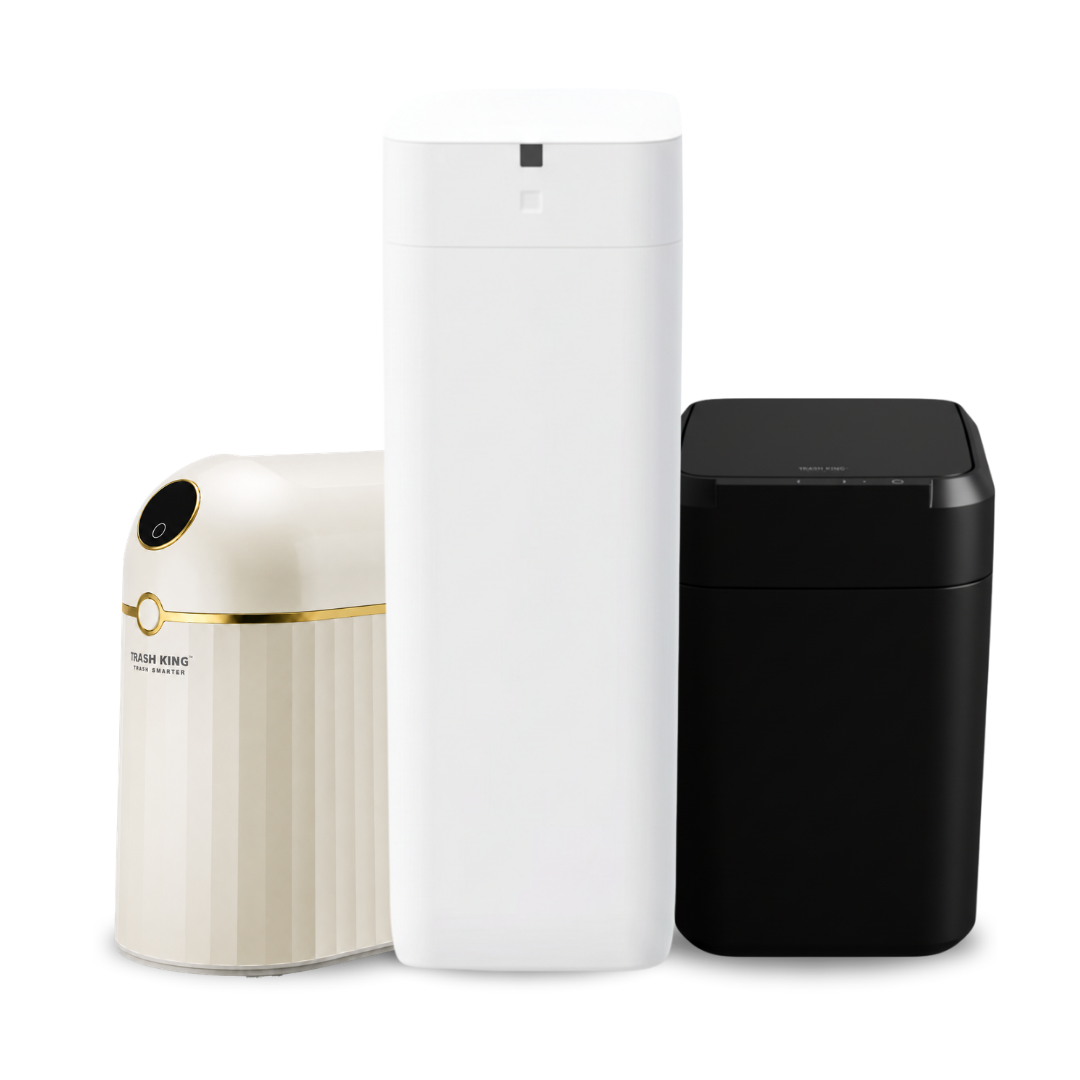
| Royal Bin® Ultra 30L | $349 | 30L | Motion sensor | Yes, and reloads | SmartRing™ refills, as low as $0.28 per bag |
| EKO Mirage-X | $109.99 | 80L | Motion sensor | No | Standard bags fit; fitted Code G available |
| Ninestars Dual-Compartment | $118.99 | 18.5 gal total | Motion sensor | No | Standard bags; sorts recycling |
| iTouchless SensorCan 13G | $84.97 | 13 gal | Motion sensor | No | AbsorbX filter about $37 to $60 per year |
The consensus pick: simplehuman
Every prestige roundup lands in the same place: simplehuman step cans are the kitchen establishment, and the 58L Sensor Can ($300) is its smart flagship, with voice and motion opening and a 5-year warranty. If you want the proven, capacious, tie-your-own-bag can that editors have recommended for a decade, this is it. What a decade of consensus has not produced is a simplehuman that seals the bag; you still tie it, carry it, and drip it across the floor yourself.
Best self-sealing kitchen can: Royal Bin® Ultra 30L ($349)
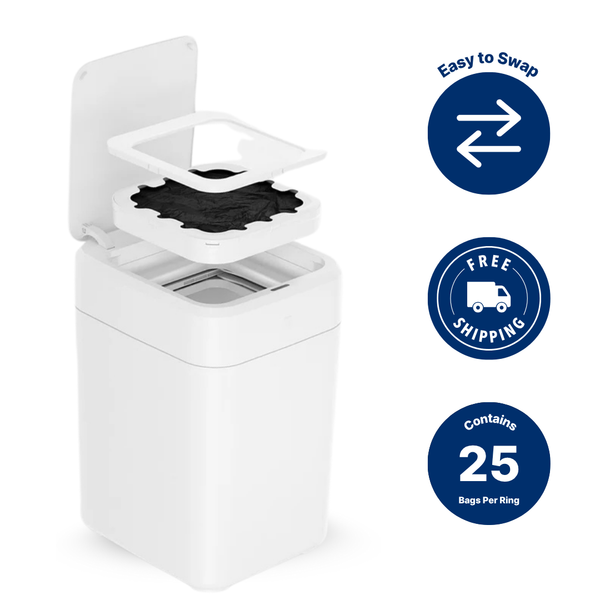
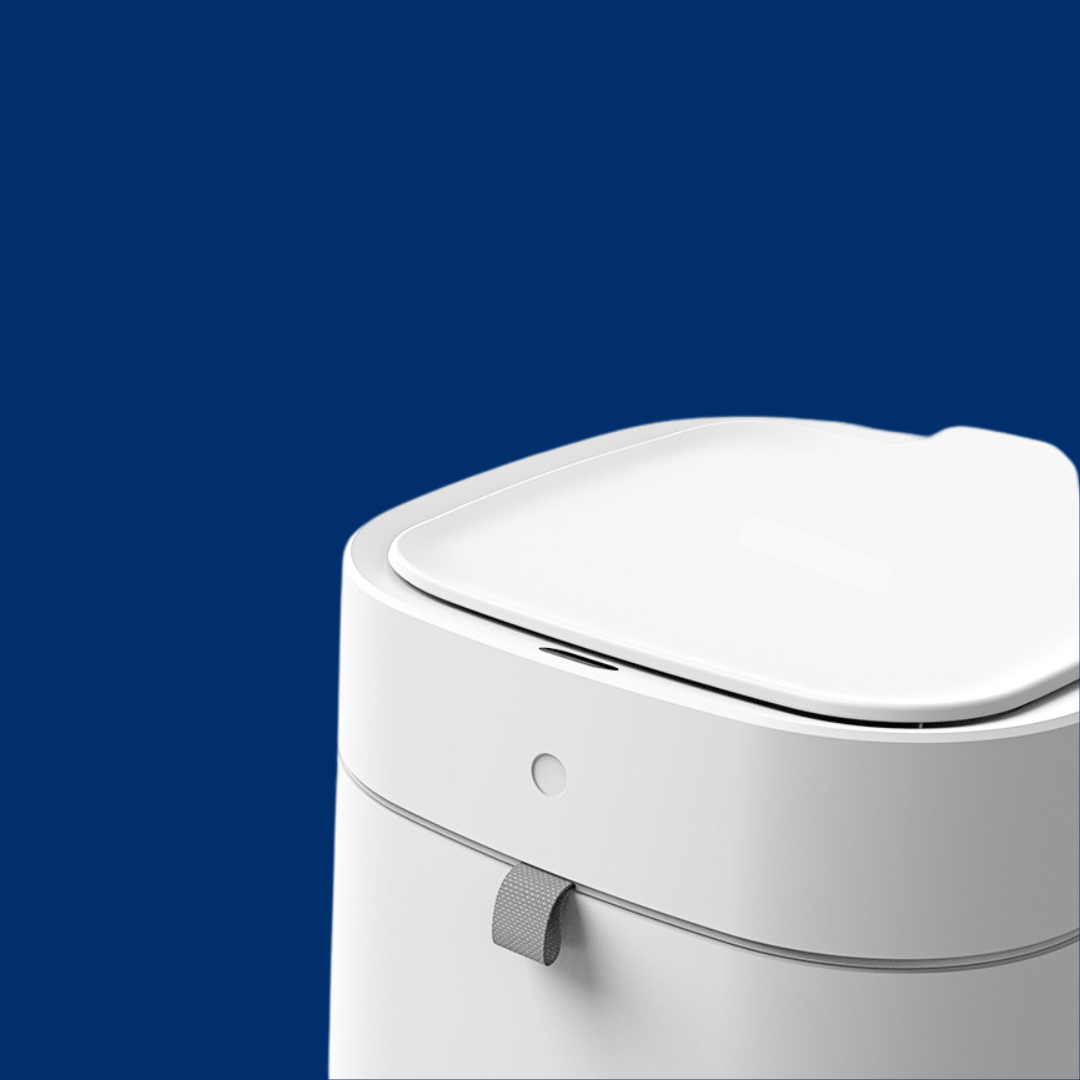
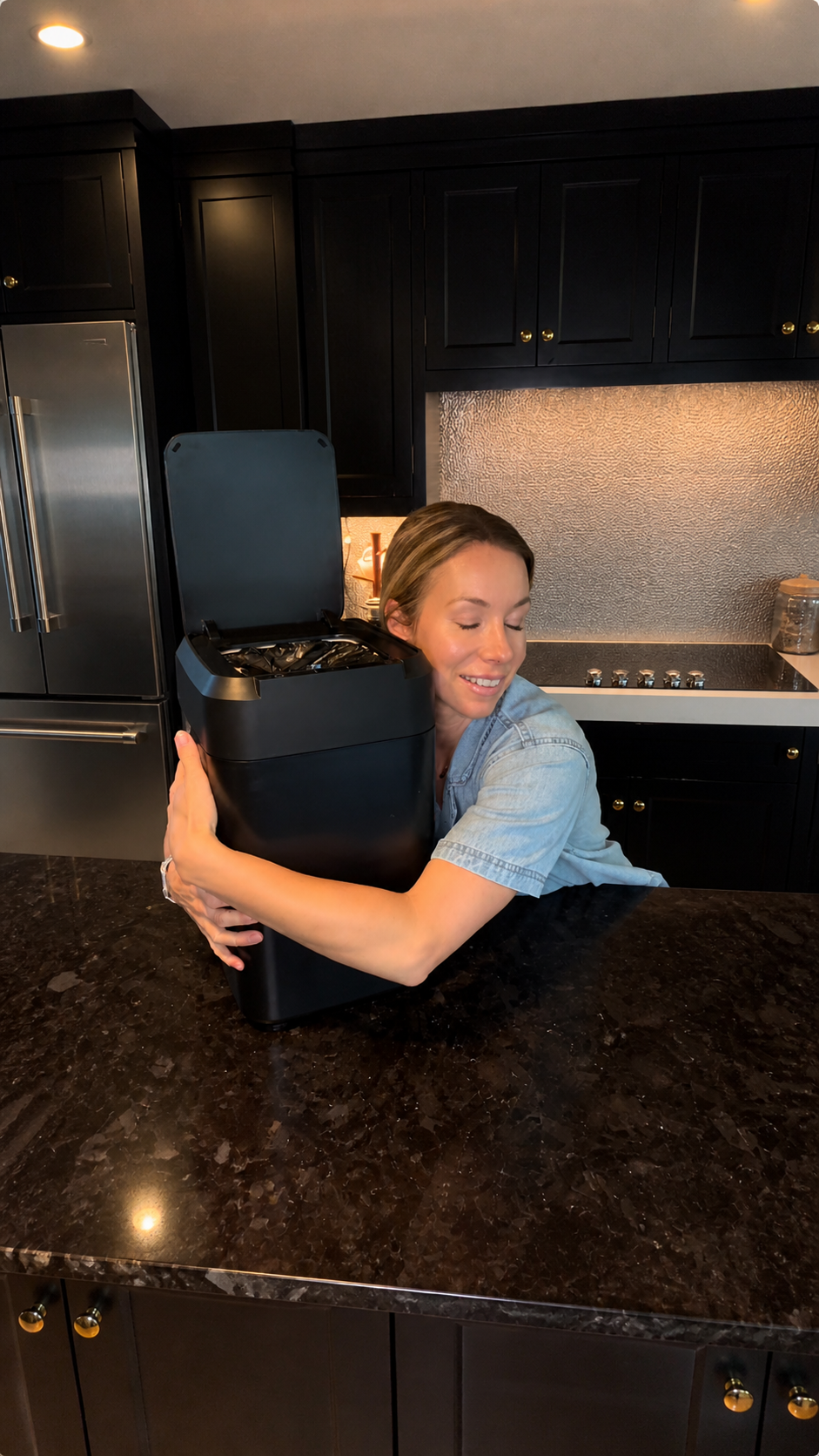
The Ultra is the sealing system at kitchen scale: 30 liters, motion-sensor lid, and when a bag is full it heat-seals it shut and loads a fresh SmartRing™ bag automatically, so raw chicken packaging and coffee grounds leave in a closed bag. Trash King® rates its battery at 70+ days per charge over USB-C (about a 2-hour charge). It carries the lifetime warranty and free shipping. The honest trade: at 30L it is smaller than the 13-gallon establishment, so a big household empties it more often, though each emptying is a sealed bag swap that takes seconds instead of a wrestling match. Households that want the same system smaller, for tighter spaces, step down to the Royal Bin® 17L ($199).
Best capacity value: EKO Mirage-X ($109.99)
Eighty liters is the biggest sensor can in this guide, and it costs less than a third of the flagships. Standard bags fit, the sensor is quick, and the running gear is 4 AA batteries. You tie the bags and there is no published warranty duration on EKO's US store, but as a pure volume-per-dollar answer for a high-output kitchen, nothing here touches it.
Best for recycling households: Ninestars dual-compartment ($118.99)
Two 9.25-gallon compartments in one sensor can, trash on one side and recycling on the other, for $118.99. Ninestars' two-year warranty is scoped by their own policy page to the lid electronics only, and the bags are manual, but the sorting layout is genuinely useful and nobody else in this guide offers it at this price.
Best budget sensor can: iTouchless SensorCan ($84.97)
The default for a reason: 13 gallons, a carbon filter in the lid, standard bags, $84.97. Add the AbsorbX filter subscription (about $37 to $60 a year) and D batteries to the true cost, and a one-year warranty per their manuals, and it is still the cheapest credible way into a sensor kitchen can.
FAQ
What size trash can does a kitchen need?
Thirteen gallons (about 50 liters) is the standard kitchen size for a family. Smaller cans (the Ultra at 30L, the Royal Bin® 17L) suit smaller households or anyone who would rather swap a sealed bag more often than wrestle a huge open one less often.
Step can or sensor can for a kitchen?
Sensor, if your hands are regularly full or messy while cooking; that is the entire use case. A step can (simplehuman's establishment) is simpler and never needs power. Editors have favored step cans for a decade; cooks with chicken on their hands tend to favor sensors.
Is a self-sealing can worth it in a kitchen?
Kitchen waste is the wettest and worst-smelling in the house, which is exactly what sealing is for: the full bag closes itself, odor included, and a fresh bag is already loaded. The Ultra 30L ($349) is the kitchen-sized sealing can; the math is in our self-sealing guide.
How much do kitchen trash bags cost per year?
At a bag a day: proprietary liners run about $0.32 each for simplehuman Code Q, SmartRing™ refills run about $0.28 to $0.50 a bag, and standard store bags in the EKO, Ninestars, and iTouchless cans run whatever your grocery store charges, plus the iTouchless filter at about $37 to $60 a year.
What is the biggest smart kitchen trash can here?
The EKO Mirage-X at 80 liters ($109.99), then simplehuman's 58L Sensor Can. Capacity is the one contest the self-sealing cans deliberately do not enter; they compete on the bag instead.
Sources
Brand product and policy pages checked October 10, 2026: simplehuman.com, trashkingstore.com (Ultra 30L page), ekousa.com, ninestarsusa.com, itouchless.com. Editorial-consensus framing from our October 2026 category audit of Wirecutter, CNN Underscored, and roundup coverage. Prices and terms change; each brand's own page is the final word.
More: the Ultra 30L guide, Royal Bin® vs simplehuman, the odor control guide, and the hub guide to the best self-sealing trash cans.